Depending on the unique needs of your project, you can choose between ASTM A105 blind flanges and stainless steel blind flanges. ASTM A105 blind flanges are best for uses where cost is important, and temperature and pressure conditions are moderate. On the other hand, stainless steel blind flanges work better in harsh environments because they resist corrosion better. When made to the right diameter standards, both of these materials work well for pipe fitting. The choice depends on weighing the upfront cost against the expected long-term performance of your industrial application.
Understanding ASTM A105 Blind Flange Fundamentals
The ASTM A105 specification includes information about carbon steel forgings that are used in piping applications. This material standard makes sure that mechanical qualities are the same for different makers. It is easy to weld because the material usually has no more than 0.35% carbon.
These carbon steel plates work well at temperatures as high as 450°C (842°F). The temperature and size of the flange affect the pressure number. Standard thickness goes from 15mm to 150mm based on what size of the pipe needs to be.
Hot forging and machining are two manufacturing steps that help make very tight flange connection limits. Quality control methods make sure that ASME B16.5 dimensional specifications are followed. Each plate is checked for size and for proof of the material used.
ASTM A105 blind flanges are a better fit for your project if you need cheap options for normal industrial uses.
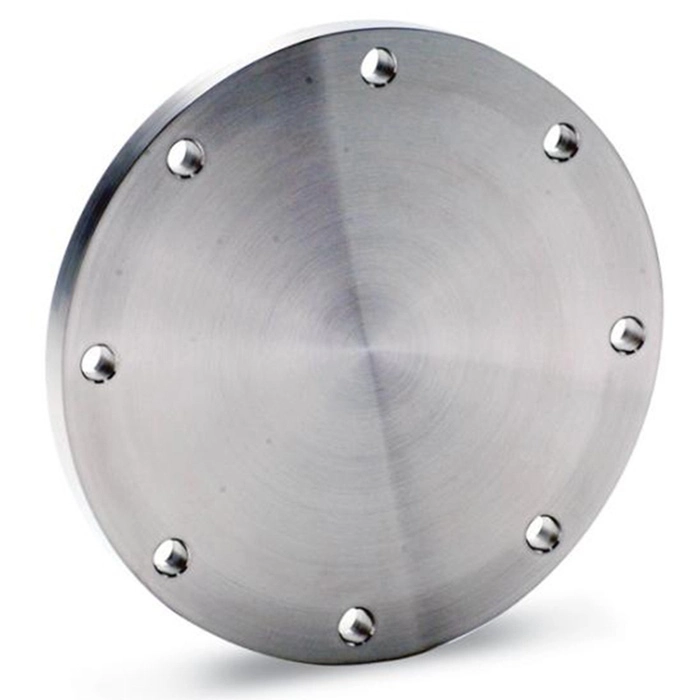
Stainless Steel Blind Flange Properties and Applications
Stainless steel blind flanges have more than 10.5% chromium, which forms an inactive oxide layer. This protective layer stands up to rust very well in harsh conditions. Stainless steel versions of grades 304, 316, and 321 are common.
Depending on the grade chosen, the temperature range goes from extremely cold to 870°C (1598°F). The material keeps its strength even when the temperature changes a lot. For applications with big diameters, flange weight must be taken into account.
Surface treatments improve performance by using a range of finishing choices. Pickling and passivation both get rid of surface impurities and make the material more resistant to rust for ASTM A105 blind flanges. Mirror polishing makes things clean enough to be used in pharmaceutical applications.
If you need to resist corrosion better for chemical processing or marine settings, then stainless steel blind flanges are better for your unique use.
Cost Analysis: Initial Investment vs. Long-term Value
Material choices have a big changes on the costs of getting them for the first time. ASTM A105 flanges are usually 40% to 60% cheaper than stainless steel ones that are the same in every other way. Carbon steel is a popular choice for projects that need to save money because of its price.
Costs for taking care of the tools over their lifetime tell a different story. For carbon steel not to corrode, the coating must be redone often. How often replacements have to be made rises in acidic settings, which impacts the total cost of ownership.
The cost of installation work is about the same for both materials. The amount of time and skill needed for different welding processes is about the same. Flange gasket selection and flange bolt size follow the same rules.
There are three things to think about when it comes to cost:
- The cost of getting materials makes up 30–40% of the total cost of the project
- The cost of installation work is 25–35% of the total.
Lifecycle upkeep sets the long-term value of the product.
If you need to keep the budget for your project low at the start, ASTM A105 has instant cost benefits for applications where they are appropriate.
Performance Comparison: Strength and Durability Factors
| Property | ASTM A105 | Stainless Steel 316 |
|---|---|---|
| Tensile Strength | 485-620 MPa | 515-620 MPa |
| Yield Strength | 250 MPa minimum | 205 MPa minimum |
| Operating Temperature | -29°C to 450°C | -196°C to 870°C |
| Corrosion Rate (Marine) | 0.1-0.5 mm/year | 0.001-0.01 mm/year |
The mechanical strength properties of materials show that they have similar amounts of performance. Either choice will work for industrial piping systems that have a normal pressure level. Impact resistance testing shows that there is enough toughness for the working circumstances.
Fatigue resistance is very important for things that involve pressure cycles, such as ASTM A105 blind flanges. When it's loaded over and over again, stainless steel works much better. For carbon steel to have the best fatigue life, it needs stress relief methods.
If you need better mechanical properties for tough uses, both materials are strong enough, but stainless steel is better at resisting fatigue.
Environmental Considerations and Corrosion Resistance
In open settings, carbon steel flanges are affected by atmospheric corrosion. When the humidity is over 70%, rusting happens a lot faster. Protective coats become very important when you want to use something for a longer period of time than expected.
The chemicals that are compatible with different materials can vary a lot. Flanges made to ASTM A105 must be carefully checked to ensure they will be used in acidic or basic settings. Most grades of stainless steel do a good job of resisting typical industrial chemicals.
Carbon steel parts used in marine applications face specific problems. Testing with salt spray shows that things break down quickly when they don't have the right security. Stainless steel stays strong when it is in contact with seawater.
- Changes in the surrounding temperature affect thermal expansion.
- How much rust protection is needed depends on how humid it is.
- Chemical contact determines what materials can be used together safely.
- Maintenance access affects the ability to refill the coating.
If you need dependable performance in settings where corrosion happens, use stainless steel blind flanges because they are better at resisting environmental damage.
Manufacturing Standards and Quality Certifications
International compliance makes sure that projects are accepted and safety rules are followed around the world. ASME standards fully spell out the material needs and acceptable variations in size for parts. GOST standards keep quality goals in place while allowing for regional differences.
Test certificates and dimensional inspection reports are part of the certification paperwork for ASTM A105 blind flanges. Records of heat treatment show that the right metallurgical conditions were in place for the best results. Non-destructive testing checks both the internal health and the surface integrity.
Quality control methods include checking the materials that come in and doing the final inspection. Automated measurement systems make sure that the size of the parts they make is always the same, no matter what batch they come from. Statistical process control keeps an eye on manufacturing factors all the time.
JS FITTINGS has many benefits, such as:
- Advanced automated painting production lines ensure consistent coating quality
- Compliance with ASME, ANSI, GOST, EN, BS, SANS, DIN, and JIS standards
- Diverse material options, including carbon steel, stainless steel, and alloy steel
- Customization capabilities for surface treatment, including sandblasting with anti-rust oil
- Water-based, eco-friendly paint applications for environmental compliance
- Epoxy coating options for enhanced corrosion protection
- ISO 9001, CE, and GOST-R certifications validate quality management systems.
- More than 40 years of experience making pipe fittings
- Four advanced production lines that help keep delivery schedules on time
- Full testing facilities that make sure products are reliable
- A global supply chain that serves markets in the Middle East, South America, Europe, and Asia
- Ongoing process improvement programs that help the company stay ahead of the competition
If you need to be sure that important applications are working correctly, choose makers with a lot of different certifications from around the world to make sure that your project's compliance requirements are met.
Application-Specific Selection Guidelines
For inland uses in oil and gas projects, carbon steel is usually the material of choice. It is important to carefully check the materials used in refineries based on how they are used. For product purity reasons, downstream uses often call for stainless steel.
Power plants use both materials based on where the system is located. Stainless steel's ability to prevent corrosion is helpful for boiler feedwater systems. With the right safety steps in place, coal handling systems can safely transport ASTM A105 blind flanges.
The chemical processing industry values how well different materials can be used together above costs. The ideal way to choose materials depends on the properties of the process fluid. Emergency stop systems need to be able to count on their performance over the long term.
Selection factors for various fields:
- Petrochemical: The ability of a substance to work with process fluids
- Power generation: Resistance to temperature changes and thermal shock
- Water treatment: stopping chloride stress corrosion cracking
- Food processing: Cleaning compatibility and sanitary standards
- Marine: Resistance to damage from saltwater and exposure to the atmosphere
If you need help with industry-specific applications, asking expert manufacturers for advice will help you choose the best materials for your needs.
Conclusion
Blind flanges made of stainless steel and those made to ASTM A105 standards are both very important to the pipe systems used in industry. The cost of materials and their long-term performance needs must be balanced. Carbon steel flanges are a cheap way to get things done in normal situations, but stainless steel flanges work better in harsh conditions.
It is necessary to carefully consider the state of the budget, maintenance skills, and operating conditions for the project to succeed. It is important to choose the right materials and make sure they are of good quality, which can be done by working with skilled manufacturers. JS FITTINGS offers a wide range of flange solutions based on years of experience in production and certifications from around the world.
The best decision can be made by knowing exactly what you need to do and talking to experts in technology.
FAQs
1. What is an ASTM A106 blind flange, and how does it differ from other flange materials?
An ASTM A106 blind flange is typically paired with ASTM A106 seamless pipe systems, offering a secure seal for pipe ends. Compared with stainless steel blind flanges, ASTM A106 carbon steel options provide strong mechanical performance at a lower cost, making them suitable for standard temperature and pressure applications.
2. When should I choose an ASTM A106 blind flange for my project?
Use ASTM A106 blind flanges when you need a cost-effective solution for moderate operating conditions. They perform well in typical industrial environments where corrosion exposure is limited, and budget control is important.
3. Are ASTM A106 blind flanges suitable for corrosive or marine environments?
Not ideally. Like A105 carbon steel, ASTM A106 requires protective coatings to resist corrosion. For chemical, marine, or high-humidity environments, stainless steel blind flanges offer superior long-term durability.
Partner with JS FITTINGS for Your Industrial Flange Solutions
Industrial projects demand reliable ASTM A105 blind flange suppliers who understand complex application requirements. JS FITTINGS combines four decades of manufacturing expertise with modern production capabilities. Our advanced facilities produce high-quality carbon steel and stainless steel flanges meeting international standards.
Engineering support teams assist with material selection and specification development. Technical documentation includes comprehensive test certificates and compliance verification. Project management capabilities ensure on-time delivery for critical construction schedules.
Quality assurance programs encompass material traceability through final inspection procedures. Automated production lines maintain consistent dimensional accuracy and surface finish quality. Environmental compliance includes eco-friendly coating options and sustainable manufacturing practices.
Choosing the right ASTM A105 blind flange manufacturer impacts project success significantly. JS FITTINGS provides competitive pricing without compromising quality standards. Our global supply chain serves diverse markets across multiple continents effectively.
Ready to discuss your specific flange requirements? Our technical team provides expert guidance for optimal material selection and specification development. Contact us at info@hb-steel.com to explore how our comprehensive flange solutions can enhance your next industrial project.
_1757576028658.webp)
_1761034851179.webp)