What is a pipe flange with a weld neck weld neck pipe flange? One of the most important parts of industrial plumbing systems is discussed in A Complete Guide for Buyers in Manufacturing. For high-pressure use in factories, chemical plants, and power production systems, these specialized flanges are the best choice. Knowing how they are made, what good things they do, and how to choose the right ones can have a huge effect on your project's safety, compliance, and long-term performance. This all-inclusive guide goes over everything a buyer should know about welded connection flanges, including technical details and cost factors. It helps you make smart buying choices that lower project risk and guarantee dependable performance for decades.
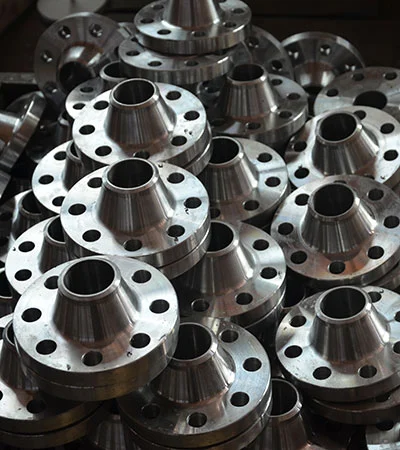
What Is a Weld Neck Pipe Flange?
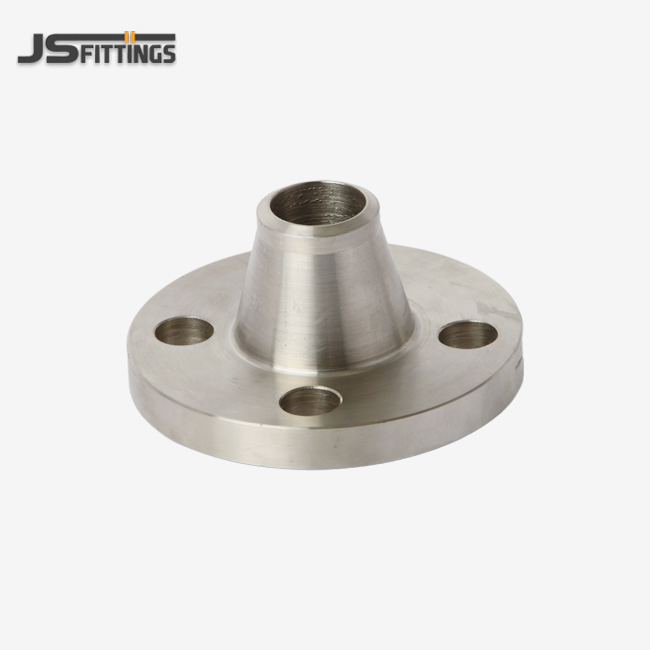
For industrial plumbing systems, the weld neck pipe flange is the strongest and most dependable flange type. The neck, or hub, of this high-pressure flange sticks out from the flange face and makes a sloped connection between the pipe and the flange body. The neck is welded straight to the pipe. This makes a smooth metal path that gets rid of places where stress builds up that are common in other flange designs.
Based on the needs of the application, steel flange design usually has either a raised face or a flat face. The neck part is a perfect match for the pipe's inside diameter, which makes sure that the fluid flows smoothly with no changes in pressure or turbulence. Because these flanges fit together perfectly, they are great for important uses where the stability of the system must not be weakened.
Manufacturing standards control every part of these components, from how big or small the parts can be to what the materials are made of. ANSI flange requirements make sure that flanges from different companies will fit together by setting standard sizes, pressure ratings, and bolt patterns. Welding makes a permanent joint that is stronger than the original pipe material. This gives it great stability in tough industrial settings.
These flanges work best in situations where very high or low temperatures, corrosive substances, or repeated loading conditions are present. The tapered neck shape spreads stress evenly over the surface, which makes them better at resisting fatigue. Engineers using this method get rid of sharp changes that could fail when they are pushed or heated and cooled repeatedly.
The Critical Industrial Need These Flanges Address
When you use standard ways to join pipes, industrial plumbing systems run into really big problems that can't be fixed. When there is a lot of pressure, a lot of heat, or a lot of corrosion, it is very important that the link stays reliable. Under these tough conditions, slip-on flanges or threaded connections usually fail. This leads to system breakdowns, environmental problems, and downtime that costs a lot of money.
The strength of the pipeline system relies on how well each joint is connected. Welding makes the strongest possible link between parts, making them one long piece of metal. This gets rid of the weak spots that come with mechanical links, in which gasket failure or bolt loosening can make the system unsafe.
Applications of fluid movement that use dangerous chemicals, steam at high temperatures, or gases under pressure need to be able to completely rely on containment. Even small leaks can put people's safety at risk, hurt the environment, and cause work to stop for millions of dollars. These specialized flanges meet this need by making sure that the links don't leak and stay strong for the entire lifetime of the system.
The ability to get to maintenance areas is another very important thing to think about when designing an industrial building. Weld neck pipe flange joints need more planning at the beginning, but they get rid of the need to do regular upkeep that bolted connections need. This lowers the cost of doing things in the long run, and people who have to work on dangerous processes don't have to worry as much about getting hurt.
Regulatory compliance makes a lot of flange selection choices, especially in the petrochemical, pharmaceutical, and food processing industries. These flanges meet strict code standards for pressure vessel connections. This helps businesses keep their working licenses and avoid fines.
Core Features and Engineering Excellence
These flanges are different from others on the market because of the curved neck design, which is an important engineering breakthrough. This slow change spreads the stress equally across the connection zone. This gets rid of the stress focus points that lead to early failure in other flange types. The best way for stress to move from the pipe to the flange body is usually along a 1:3 slope curve.
Flange dimensions follow standards that are known around the world. This makes sure that flanges from different manufacturers and suppliers can be used with each other. The standard bore diameters are the same as common pipe sizes. The outer measurements are made to fit standard bolt patterns and gasket shapes. This standardization makes it easier to purchase and lowers the inventory needs for maintenance operations.
A lot of different alloys made for certain situations are available when choosing materials. Carbon steel versions work for general industrial uses, but stainless steel versions work better in chemical settings because they don't corrode. Inconel, Hastelloy, and other specialized metals work in places where the temperature is very high, or the environment is very corrosive, and regular materials would fail right away.
The face flange design with a lift makes a better gasket seal than one with a flat face. The higher surface focuses the weight of the bolt on a smaller area, which makes the gasket more compressed and the seal more reliable. From normal spiral wound gaskets to special PTFE or metal-clad designs, different face finishes work with different gasket types.
Some pressure rating powers are much better than others in flanges. Some setups can handle more than 10,000 PSI. Through the weld neck pipe flange welded neck design, a continuous metal path and even stress distribution are achieved, giving the object this amazing power. Because there are no mechanical fixings in the pipe connection, there are no possible ways for the fluid to leak out, which is not the case with other flange styles.
Advanced Manufacturing Technology and Quality Control
New ways of metal fabrication make sure that these flanges meet the high-quality standards needed for very important industry uses. Forging makes a better grain structure than casting, which makes the metal stronger and better able to fight fatigue. The forging process lines up the pieces of metal with patterns of stress flow, which makes the material stronger and better able to carry heavy loads.
Heat treatment processes make material properties better for certain circumstances. Normalizing processes get rid of internal stresses from the forging process, and controlled cooling rates get the hardness levels you want. These heating steps make sure that the mechanical properties are the same all over the flange body. This stops the formation of any weak spots that could cause early failure.
Machining makes very exact dimensional tolerances that are needed for correct fitting and performance. Computer-controlled equipment keeps the hole concentric within narrow limits, which ensures that the pipe is lined up correctly when it's put in place. Gasket distortion that could weaken the seal is not allowed by face-level standards.
Before shipping, non-destructive testing methods check the internal integrity and find possible flaws. Ultrasonic testing can find internal flaws, like inclusions or voids that could turn into cracks when the service load is applied. Magnetic particle testing can find issues on the surface that may not be seen during a normal check.
Each flange comes with proof of certification, which shows where the parts came from. Mill test certificates show a part's chemical makeup and mechanical features, and dimensional reports make sure that the part's size matches the standards that it needs to follow. This paperwork backs up quality control systems and the need to follow rules for weld neck pipe flange components.
Key Advantages for Industrial Applications
The main reason these flanges are chosen for important uses is that they are much better at resisting leaks. The welding connection forms a metallurgical bond that eliminates possible paths for leaks that can happen with mechanical connections. This dependability is especially useful in dangerous situations where even small leaks could cause safety or environmental problems.
The tapered neck shape leads to better stress distribution, which results in an exceptionally long fatigue life. In poorly built connections, changes in pressure or temperature can cause cracks because of the stress concentrations they create. The gradual transition gets rid of these things that cause stress, which makes the service life much longer than with other systems.
The corrosion resistance is improved by the metal's uninterrupted structure and the removal of gaps where acidic materials could collect for weld neck pipe flange applications. Mechanical connections make spots where fluids can stop moving, which causes corrosion in those specific spots that weaken the stability of the connection. The smooth inside stops liquids from getting stuck and makes it easier to clean for sanitary uses.
Installation flexibility makes it possible to work with different piping setups and limited room. The welded link lets you put it in the right spot and makes sure you don't have to worry about getting to the bolts for maintenance. This is especially useful in places with a lot of pipes, where it might be hard to get to the bolts.
Long-term cost effectiveness comes from needing less maintenance and having a longer working life. Although the up-front cost is higher than that of slip-on options, the lack of needed regular repair and greater dependability lead to big savings over the entire lifetime. This economic benefit stands out more in important cases where the cost of downtime is high.
Important Limitations and Design Considerations
It is hard to install because the joints need to be properly welded. Welding requires very careful control of the heat used in order to avoid changes in shape or metalworking problems that could hurt performance. If welding is done wrong, it can weaken the bond. This is why quality control is so important during the installation process.
Flange installation permanence means that the flange can't be easily taken off for repair or system changes. Once they are welded in place, these plates can only be removed by cutting up the part they are attached to. This issue means that the system's initial design needs to be well thought out to plan for future upkeep or changes.
It costs more because the neck construction needs more material, and the methods are more complicated. Compared to easier flange designs, forging and precision machining raise the cost of production. These higher costs must be thought about in relation to the benefits of better performance and the need for less upkeep.
If the right steps are not taken every time, welding quality reliance could lead to reliability issues. The strength of the final connection rests on the quality of the weld, which makes testing and inspection very important. If you don't weld correctly, defects can be made that don't show up until the system is used in full working conditions.
It may not be possible to use the process in places where the piping is very close together because of the space needed for welding the weld neck pipe flange. There needs to be enough space around the whole circumference for the welding process, which might not be the case in tight spaces or when something is being modified. When designing the piping plan, this limitation needs to be kept in mind to make sure there is enough room for welding.
Competitive Analysis: Superior Performance Comparison
Slip-on flanges are the most popular alternative, but they are much less effective and easier to install. These flanges slide over the outside of the pipe and are attached with fillet welds. The weld toes are places where stress builds up. In cyclic service uses, the fatigue life is usually 25–50% of how well the neck is welded.
Hole-weld flanges offer another way to compare, as they have a recessed hole that the end of the pipe fits into. Socket-style fittings work better than slip-on designs in terms of alignment, but their internal crevices make places where fluid can still stay, and rust can start. The stress buildup at the corner of the socket makes it less durable than welded neck designs with a smooth transfer.
While threaded flanges are easy to install, their basic design issues mean they can only be used in non-critical, low-pressure situations weld neck pipe flange. The threaded connection makes a lot of stress concentration points and possible leak routes. The connection's ability to handle bent moments or thermal stresses is also limited by thread engagement.
Blind flanges are used for different things, but they are made in the same way and from the same materials as welded neck shapes. These parts close off the ends of pipes instead of connecting different pieces of pipe, but the standards for quality and testing are still the same. This compatibility makes it easier to get both types of components for projects that need them and to control the quality of both types.
As it gets harder to use, the performance benefits of welded neck designs become more obvious. Flanges like these are certainly the best choice for high-pressure applications or ones with extreme temperatures or corrosive substances because they are more reliable and last longer.
Target Applications and Industry Usage
These flanges are very important for process pipe that carries dangerous chemicals at high pressures and temperatures in petrochemical plants. The combination of corrosive media and high operating severity makes connection reliability essential for both safety and environmental compliance. Refineries usually require these flanges for all important service applications where failure could have big effects.
Power companies use these parts a lot in systems for steam, feedwater, and cooling. Less advanced flange designs can't handle the high-temperature and high-pressure conditions that are common in power uses. Better fatigue resistance is very useful in cycling applications where thermal stresses make the working conditions hard.
These flanges are very important for chemical processing businesses because they are used in reactor connections, high-pressure loops for making things, and services that deal with harmful chemicals weld neck pipe flange. The ability to fight corrosion and perform leak-tight protects people and equipment while making sure that the process is reliable. A lot of chemical processes can't handle even small amounts of contamination from links that are leaking.
Offshore oil and gas sites are very tough to maintain because they are hard to get to and need to be reliable. It's very expensive to lose a connection in this harsh and remote marine setting. During unmanned operation times between planned maintenance shutdowns, these flanges make sure that everything works properly.
More and more, municipal water treatment plants are saying that these flanges are needed for important tasks that use drinking water systems or wastewater treatment processes. The ability to fight corrosion and prevent leaks protects public health and ensures that rules are followed. The long work life also lowers the total cost for city services that need to save money.
Conclusion
Weld neck pipe flanges are the best choice for important industrial piping uses where dependability, safety, and long-term performance must always be guaranteed. They are the best choice for tough industrial settings because of their better engineering, excellent pressure resistance, and great wear resistance. While the upfront cost is higher than simpler options, the better safety, longer lifespan, and lower need for upkeep make this choice much more economical. Knowing these parts' strengths, weaknesses, and correct uses helps people make smart buying choices that are good for both the project and the long-term value of the purchase.
FAQ
Q1: What pressure ratings are available for weld neck pipe flanges?
A: Standard pressure ratings range from 150 PSI to 2500 PSI for ANSI flanges, with custom high-pressure designs available up to 10,000 PSI or higher. The actual rating depends on material selection, temperature conditions, and flange size. Our technical team can help determine the appropriate rating for your specific application requirements.
Q2: How do I ensure proper welding procedures during installation?
A: Proper welding requires qualified welders following approved welding procedure specifications (WPS) appropriate for the base materials involved. Pre-heating may be required for certain alloys, and post-weld heat treatment might be necessary for critical applications. We provide detailed welding recommendations with each shipment and can assist with procedure development.
Q3: What material options are available for corrosive service applications?
A: Material selection depends on the specific corrosive media and operating conditions. Stainless steel grades like 316L provide excellent general corrosion resistance, while specialized alloys like Inconel 625 or Hastelloy C-276 handle extreme corrosive environments. Our metallurgical specialists can recommend optimal materials based on your process conditions.
Partner with JS FITTINGS for Premium Weld Neck Pipe Flange Solutions
Selecting the right weld neck pipe flange manufacturer directly impacts your project's success, safety compliance, and long-term operational reliability. JS FITTINGS brings over four decades of specialized expertise in manufacturing high-quality steel butt-weld pipe fittings and flanges that exceed industry standards. Our ISO 9001, CE, and GOST-R certifications demonstrate our commitment to quality management systems that ensure consistent product performance.
Our advanced manufacturing capabilities include four dedicated production lines specifically designed for precision flange fabrication. These facilities utilize state-of-the-art forging equipment and computer-controlled machining centers to maintain the tight tolerances essential for proper flange installation and performance. Every component undergoes rigorous testing and inspection before shipment, ensuring you receive products that meet or exceed specification requirements.
Global project experience spanning the Middle East, South America, Europe, and Asia provides a deep understanding of diverse industry requirements and regulatory standards. This international exposure helps us anticipate potential challenges and provide solutions that streamline your procurement process while ensuring compliance with local codes and standards.
Competitive pricing strategies help control your project budgets without compromising quality or performance. Our efficient manufacturing processes and direct-from-factory sales eliminate intermediary markups while maintaining the premium quality your applications demand. Volume pricing options provide additional savings for large projects or ongoing supply agreements.
Technical support services extend beyond simple product supply to include application assistance, specification review, and installation guidance. Our engineering team can help optimize your flange selections for specific operating conditions, potentially reducing costs while improving performance. Ready to discuss your specific requirements? Contact us at admin@chinajsgj.com to connect with our technical specialists who can provide detailed quotations and application recommendations.