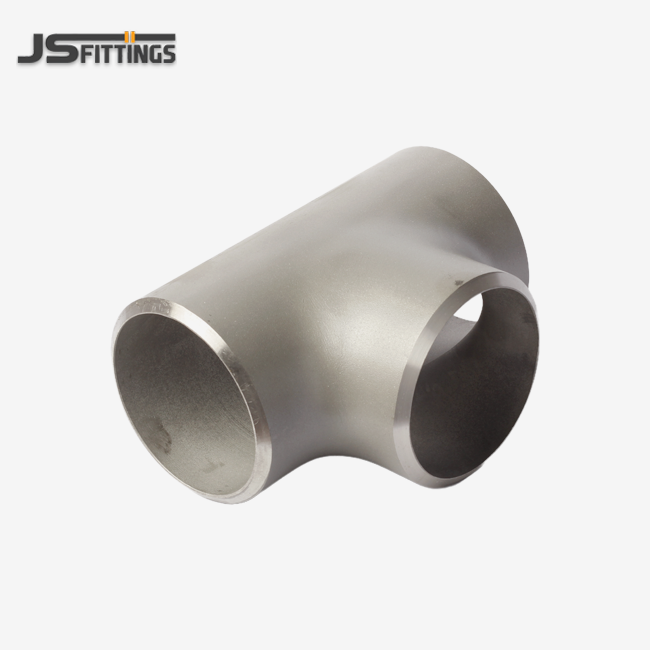
Finding the best Buttweld Steel Pipe Tees for industrial uses in 2025 means picking the right fittings. The right ones can make or break your project. These basic T-shaped pipe parts are the backbone of modern pipe systems. They make it possible to control flow and connect branches in a wide range of industries. In chemical processing plants and oil refineries, the quality and dependability of your pipe tee fittings have a direct effect on how well the plant works, how safe it is, and how much it costs in the long run. The industrial world of today needs fittings that not only meet strict requirements but also work very well in harsh conditions.
Learn about buttweld pipe fittings and how important they are
However, welded pipe fittings are the best way to connect pipes permanently because they are very strong and reliable for high-pressure uses. These fittings connect pipes by welding, which makes connections that are seamless, leak-proof, and able to handle high temperatures and pressures.
Carbon steel, stainless steel, or alloys are precisely machined to exact specifications as part of the manufacturing process. Each fitting goes through strict quality checks to make sure it fits correctly and doesn't break. Modern buttweld tee production uses advanced metallurgy and quality control systems to make sure that all production batches perform the same way.
These connections in Buttweld Steel Pipe Tees are used in factories because they get rid of the weak spots that can happen with threaded or flanged systems. The welded joint becomes an integral part of the pipeline. It spreads stress evenly and keeps the system's integrity even when temperatures change. This dependability is very important in situations where downtime costs a lot of money every hour.
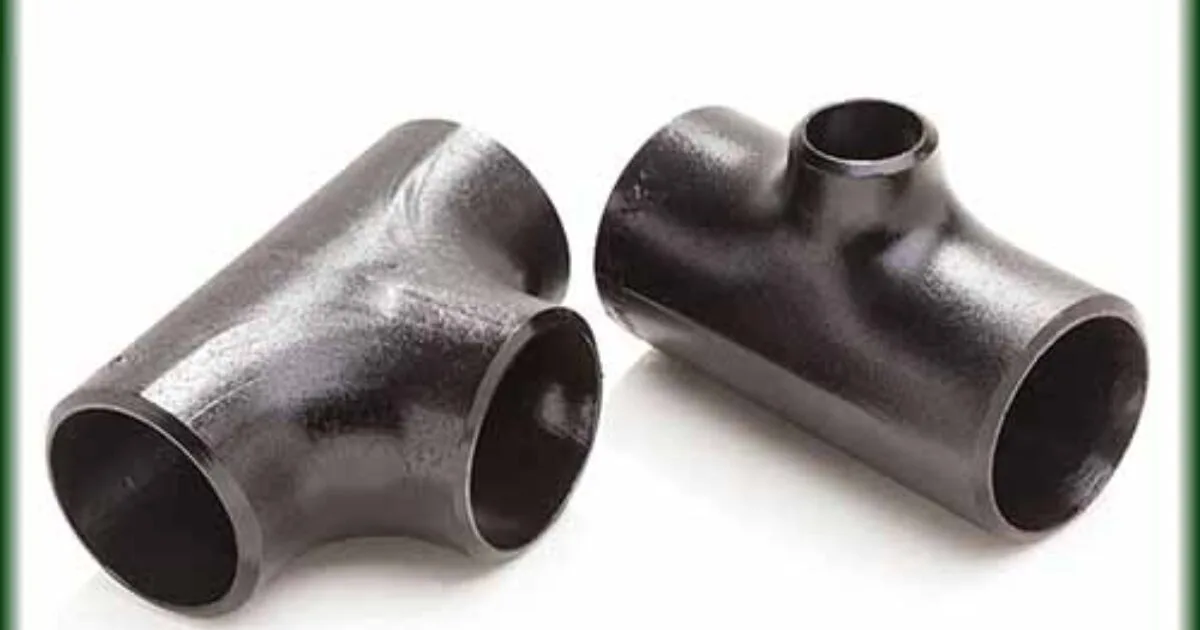
Pipe Tee Connections' Most Important Uses
Pipe tee connections are used in seven main ways in industrial piping systems, each one meeting a different set of operational and flow control needs.
- Flow distribution systems: Equal tee fittings are used in chemical plants to split main process streams into several branch lines. This app lets operators send raw materials to multiple processing units at the same time, which makes production more efficient. The welded connection makes sure that no dangerous chemicals leak out, which protects both people and the environment.
- Taking off instruments: Reducing tees lets you connect smaller instrumentation lines to larger process pipes. These connections allow pressure gauges, temperature sensors, and flow meters to work without putting the main pipeline at risk. The smaller branch opening can fit accurate measuring tools while the main line can still handle full flow.
- Bypass Line Integration: Maintenance tasks need systems that can change the flow of traffic while the equipment is being serviced. Tee connections make these temporary rerouting systems possible, so they can keep running while important parts are being inspected or fixed. This setup keeps operations going and cuts down on production losses as much as possible.
- Power plants use tee fittings to send steam from boilers to many turbines or heating systems. This is called a steam distribution network. The strong, welded design can handle high-temperature, high-pressure steam while still distributing flow reliably. For these uses, you need materials that are very good at resisting thermal shock and keeping their shape.
- Cooling Water Systems: Tee connections are used in industrial cooling circuits to send cool water to different pieces of equipment. Multiple systems can be cooled at the same time with this configuration, which keeps flow rates and pressure levels at the right levels. Corrosion-resistant materials keep systems from breaking down in harsh cooling conditions.
- Fire Protection Networks: Safety systems need to be able to get to water supplies right away through branch connections that are placed in strategic places. For reliable access to fire suppression equipment and to keep water moving through the protection network, tee fittings are essential. For these life-safety uses, the strictest quality standards and legal compliance are needed.
- Process Gas Distribution: Process gases are sent from petrochemical plants to other parts of the plant using intricate pipe networks that depend on well-designed tee connections. These systems deal with a wide range of gases, from inert nitrogen to reactive hydrogen gases. They need materials and welding methods that make sure there are no leaks and the systems will work for a long time.
The choice of material and how well it works
What kind of materials are used for Buttweld Steel Pipe Tees affects how well the system works, how long it lasts, and how often it needs to be fixed. Things that are used in industry need to have certain qualities in order to work in certain situations.
Carbon steel pipe tees are easy to find and very strong for the price, so they are used in most industrial settings. ASTM A234 WPB is the most common specification. It works reliably in temperatures up to 400°F and moderate pressure. These fittings work great in water systems, networks for compressed air, and other process uses where corrosion resistance is not important.
In harsh chemical environments and high-purity settings, Buttweld Steel Pipe Tees made of stainless steel are better at keeping their shape. It is best to use grade 316L where chlorides are present, and grade 321 stainless is stable at high temperatures. People who work in the food and drug industries really like these materials because they are clean and simple to clean.
Electric power plants and petrochemical plants are two places where alloy steel tees are used because of the high temperatures and pressures there. It is easy for materials like P11, P22, and P91 to stay stable at high temperatures and not creep. The structure stays strong even when normal carbon steel fittings would break because of these special alloys.
It's important to know how thick the walls are so you can choose the right material. Schedule ratings show how strong the structure is and how much pressure it can hold. For most business uses, Schedule 40 is strong enough. On the other hand, Schedule 80 and XXS are for high-pressure systems that need walls that are thicker and can handle more pressure.
Size guidelines and things to think about when choosing a size
When the pipes are the right length, width, and height, they can be easily connected to the old ones and still flow smoothly. Pipe tee sizes are controlled by global standards to make sure they work with goods made in different places and by different companies.
For factory-made Buttweld Steel Pipe Tees, ASME B16.9 tells them what sizes they need to be. It tells you exactly how to shape the tee, how thick the wall should be, and how to prepare the ends. This set of rules makes sure that the performance is the same no matter who makes it. For big industrial projects, this makes it easier to buy things and put them in place.
The three most important pipe tee dimensions are the run size, the branch size, and the centre-to-end distance from one end to the other. Equal tees have three connections that are all the same size. Reducing tees, on the other hand, have smaller branch openings, so they can fit pipes of different sizes. The distances from the centre to the end tell us how to set up the pipes and how much space we need.
That means they can fit everything from small instrumentation lines to big process headers. Their diameters range from 1/2 inch to 60 inches. 2", 4", 6", 8", 12", and 24" diameters are industrial sizes that are often used. You can also get custom sizes for uses that don't need standard configurations.
Ends of Buttweld Steel Pipe Tees can be prepared in a number of ways, including bevelled ends for butt welding, socket weld preparations for smaller sizes, and threaded ends for some uses. Most bevel angles are 37.5 degrees, and the root face should be 1/8 inch to make sure the joint is strong, and the weld goes through fully.
How to Install and Weld Things the Right Way?
To properly put in a buttweld tee, you need to follow standard rules for quality control and welding. If you put something together right, it will last a long time and not break down while you're using it, which can cost a lot of money.
Careful alignment and fit-up steps are taken to make sure that the joint geometry is right before it is installed. If you want full penetration welds, the gap sizes, root openings, and bevel preparations must all match what the specifications say they should be. Tack welding keeps the pieces in place while the welding process is going on. It also lets the metal warm up and cool down.
The welding procedure specifications (WPS) for Buttweld Steel Pipe Tees list the parameters, such as the maximum temperature difference between passes, the speed of travel, the amperage, and the voltage. Skilled welders follow these steps to make sure that all of the joints have the same quality of weld. You can check the integrity of a weld without damaging it by using X-rays, ultrasonic testing, or dye penetrant examination.
To get rid of the stresses from welding and bring back the properties of some materials and uses, they may need to be heated. The temperature and time of post-weld heat treatment (PWHT) cycles are set ahead of time to improve the performance of joints and stop stress corrosion cracking while they are in use.
There are many types of quality documentation, such as certificates for materials, records of the welding process, and inspection reports that show the work meets the rules and the needs of the project. This paperwork helps you find things and makes sure that equipment is ready to be used in emergencies.
Rules for testing and checking quality
Pipe tee fittings must meet or beat industry standards and project-specific needs. Thorough quality assurance programs make sure of this. There are protocols in these programs for checking the materials, the sizes, and the performance.
Chemical analysis is used to find out what a Buttweld Steel Pipe Tee alloy is made of, and mechanical testing is used to find out how strong it is. On mill test certificates, these results can be found and linked to specific heat numbers and production lots. Third-party inspection services make sure that materials meet quality standards and are in compliance with the law.
When checking the size of a product, precise measuring tools are used to make sure it fits the drawing and meets industry standards. Some of the most important dimensions are the outside diameter, the wall thickness, the distance from centre to end, and the shape of the bevels. Statistical process control methods check to see if the sizes are the same from one batch of production to the next.
When the fitting is put under pressure, it is ensured that it works well in conditions that are like those it will be used in. To make sure the structure is solid and doesn't leak, hydrostatic tests use pressures that are higher than what the design calls for. These tests find any issues with the fittings before they are put in place and make sure they work safely for their whole life.
Testing methods that don't damage Buttweld Steel Pipe Tees find flaws inside and outside of them that could change how well they work. Ultrasonic testing looks for holes and cracks in a material from the inside, while liquid penetrant testing looks for holes and cracks on the outside. With these ways to check, you can be sure of the fittings' quality without putting the structure at risk.
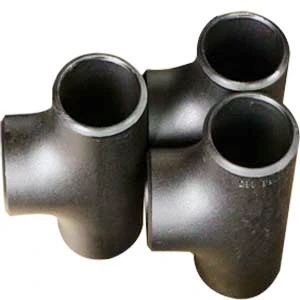
Cost Optimisation Strategies for Large-Scale Projects
Effective cost management requires balancing initial procurement costs with long-term operational expenses and maintenance requirements. Strategic purchasing decisions can significantly impact project budgets and lifecycle costs.
Volume purchasing agreements with established manufacturers provide cost advantages for large projects requiring numerous fittings. These agreements often include price protection, guaranteed delivery schedules, and quality assurance programs that reduce procurement risks and administrative overhead.
Standardisation initiatives reduce inventory complexity and maintenance costs for Buttweld Steel Pipe Tees by limiting the variety of fitting types and sizes. Standard specifications simplify procurement, reduce stocking requirements, and enable interchangeability across different project phases and maintenance activities.
Value engineering reviews identify opportunities to optimise material selection and sizing without compromising performance requirements. Alternative materials or modified designs may provide equivalent performance at reduced costs while maintaining safety and reliability standards.
Total cost of ownership calculations consider initial purchase price, installation costs, maintenance requirements, and expected service life. These comprehensive analyses often reveal that higher-quality fittings provide better value despite increased initial costs due to reduced maintenance and longer service intervals.
Conclusion
To pick the right Buttweld Steel Pipe Tees for your 2025 business projects, you should carefully consider the material's properties, the size needs, and the supplier's skills. Pipe systems that support factories all over the world depend on these key parts to do their jobs. Many modern industrial projects need high-quality fittings from well-known brands like JS FITTINGS to work well, be reliable, and be a good value. With over 40 years of experience making high-quality products, thorough quality control systems, and the ability to supply products all over the world, we can make sure that the fittings you use in your projects meet the strictest specifications and performance standards.
FAQ
Q1: What is the difference between seamless and welded pipe tees?
A: Seamless steel pipe tees are manufactured from solid billets without welded seams, providing superior strength and uniformity for high-pressure applications. Welded tees are formed from plate material with longitudinal welds, offering cost advantages for standard pressure applications. Seamless fittings typically provide better performance in critical applications where maximum reliability is required.
Q2: How do I determine the correct pressure rating for my application?
A: Buttweld tee pressure ratings depend on material grade, wall thickness, and operating temperature. Consult ASME B31.3 for process piping or B31.1 for power piping to determine allowable stresses. Design pressure should include safety factors and consider temperature effects on material strength. Professional engineering review ensures proper rating selection for critical applications.
Q3: What inspection documentation should I expect with quality fittings?
A: Comprehensive quality packages include mill test certificates showing chemical composition and mechanical properties, dimensional inspection reports, heat treatment certificates when applicable, and non-destructive testing results. Third-party inspection certificates provide independent verification of quality standards. Traceability documentation links each fitting to specific production records and material sources.
Choosing the Right Buttweld Steel Pipe Tees Supplier for Your Industrial Needs
Selecting a reliable Buttweld Steel Pipe Tees supplier requires careful evaluation of manufacturing capabilities, quality systems, and delivery performance. JS FITTINGS has established itself as a trusted partner for industrial projects worldwide through four decades of consistent excellence and innovation.
Our advanced production facilities utilise state-of-the-art equipment and proven manufacturing processes to deliver fittings that exceed industry standards. ISO 9001, CE, and GOST-R certifications demonstrate our commitment to quality excellence and continuous improvement. These internationally recognised certifications assure that our products meet the most stringent requirements for industrial applications.
Engineering support services help customers select optimal fittings for specific applications and operating conditions. Our technical team collaborates with project engineers to ensure proper material selection, sizing, and specification compliance. This collaborative approach minimises project risks and ensures successful installation and long-term performance.
Global supply chain capabilities enable reliable delivery to projects across the Middle East, South America, Europe, and Asia. Established logistics networks and inventory management systems ensure timely delivery while maintaining product quality and traceability throughout the supply chain.
When you need a dependable Buttweld Steel Pipe Tees manufacturer that combines competitive pricing with uncompromising quality, JS FITTINGS delivers the expertise and reliability your projects demand. Our commitment to excellence ensures your piping systems perform safely and efficiently throughout their operational lifetime. Ready to discuss your specific requirements and discover how our solutions can optimise your project outcomes? Contact us at admin@chinajsgj.com to speak with our technical experts and receive a customised quote for your industrial pipe fitting needs.
References
1. American Society of Mechanical Engineers. "ASME B16.9-2018: Factory-Made Wrought Buttwelding Fittings." New York: ASME Press, 2018.
2. Peterson, James M. "Industrial Pipe Fitting Design and Installation Practices." McGraw-Hill Professional Engineering, 2023.
3. International Organization for Standardization. "ISO 3419:2019 Non-alloy and alloy steel butt-welding fittings." Geneva: ISO Publications, 2019.
4. Chen, Robert K. "Materials Selection for High-Temperature Piping Applications." Industrial Engineering Quarterly, Vol. 45, No. 3, 2024.
5. Rodriguez, Maria S. "Quality Assurance in Industrial Pipe Fitting Manufacturing." Process Engineering Today, Issue 127, 2024.
6. Thompson, David L. "Cost Optimization Strategies for Large-Scale Industrial Piping Projects." Project Management in Industry, Vol. 38, No. 2, 2024.