- English
- French
- German
- Portuguese
- Spanish
- Russian
- Japanese
- Korean
- Arabic
- Greek
- German
- Turkish
- Italian
- Danish
- Romanian
- Indonesian
- Czech
- Afrikaans
- Swedish
- Polish
- Basque
- Catalan
- Esperanto
- Hindi
- Lao
- Albanian
- Amharic
- Armenian
- Azerbaijani
- Belarusian
- Bengali
- Bosnian
- Bulgarian
- Cebuano
- Chichewa
- Corsican
- Croatian
- Dutch
- Estonian
- Filipino
- Finnish
- Frisian
- Galician
- Georgian
- Gujarati
- Haitian
- Hausa
- Hawaiian
- Hebrew
- Hmong
- Hungarian
- Icelandic
- Igbo
- Javanese
- Kannada
- Kazakh
- Khmer
- Kurdish
- Kyrgyz
- Latin
- Latvian
- Lithuanian
- Luxembou..
- Macedonian
- Malagasy
- Malay
- Malayalam
- Maltese
- Maori
- Marathi
- Mongolian
- Burmese
- Nepali
- Norwegian
- Pashto
- Persian
- Punjabi
- Serbian
- Sesotho
- Sinhala
- Slovak
- Slovenian
- Somali
- Samoan
- Scots Gaelic
- Shona
- Sindhi
- Sundanese
- Swahili
- Tajik
- Tamil
- Telugu
- Thai
- Ukrainian
- Urdu
- Uzbek
- Vietnamese
- Welsh
- Xhosa
- Yiddish
- Yoruba
- Zulu
China vs India Forged Flanges for Africa Oil and Gas Projects
When procurement managers look at forged carbon steel flanges for Africa's growing oil and gas infrastructure, they have to choose between Chinese and Indian vendors. Both countries have unique strengths when it comes to production, costs, and logistics in the supply chain. Chinese manufacturers usually offer reasonable prices and the ability to quickly scale up production. Indian vendors, on the other hand, often focus on customization and technical assistance. Both countries can make high-performance flanges that fulfill international standards for oil and gas operations in Africa. The best choice relies on the project's unique needs, quality standards, budget limits, and delivery times.
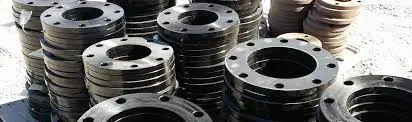
Understanding Forged Carbon Steel Flanges in Oil and Gas Applications
Manufacturing Process and Material Benefits
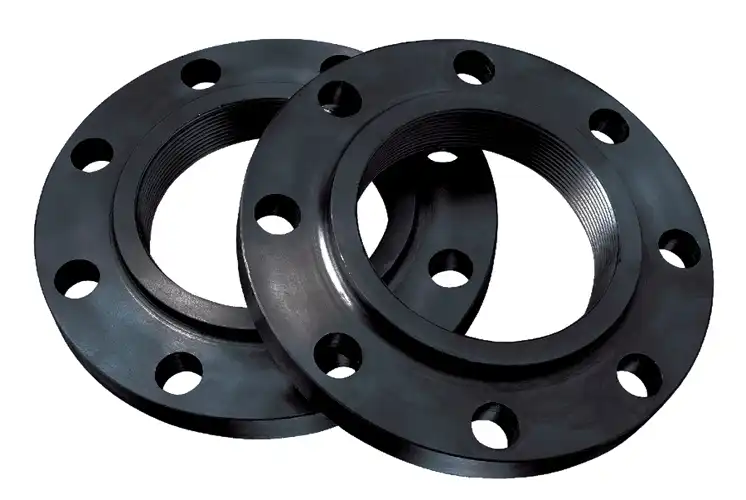
Forged carbon steel flanges are made using high-pressure forming techniques that change their molecular structure and mechanical properties in important ways. Forging gets rid of internal voids and makes a consistent grain structure, which makes parts that are stronger and last longer than cast parts. This way of making flanges makes them strong enough to handle the high pressures that are frequent in oil and gas applications. Their load-bearing capacities are higher than what the industry needs.
Forging makes the grain structure very dense, which makes it very resistant to fatigue and stress corrosion cracking. These traits are very important for oil and gas projects in Africa, where equipment has to work all the time and deal with extreme weather. Carbon steel grades come in a wide range, from low-carbon (0.05–0.25% carbon content) to high-carbon (0.61–1.50% carbon content). Each grade has a different amount of strength and ductility to meet the needs of different uses.
Critical Performance Standards for African Operations
The oil and gas industry in Africa needs parts that meet strict international standards including GOST, EN 10253, and ASME B16.9. These standards make sure that the dimensions, pressure ratings, and material qualities are all correct for safe pipeline operations. Forged flanges must be able to withstand pressure differences of more than 2500 PSI without leaking and resist corrosion from crude oil, natural gas, and processed petroleum products.
Operations in Africa are affected by the weather, with temperatures ranging from -20°C to 60°C, high humidity, and coastal sites being exposed to corrosive saltwater. Forged carbon steel flanges solve these problems by using surface treatments including sandblasting, anti-rust oil application, and epoxy coating techniques that make them last longer and need less maintenance.
China vs India Forged Flanges: Quality and Standards Comparison
Manufacturing Capabilities and Technology
Chinese forging plants use cutting-edge manufacturing technologies and automated production methods to make a lot of items while keeping quality control high. Major Chinese manufacturers have integrated facilities where they process raw materials, forge parts, and finish them all under one roof. This vertical integration helps keep costs down and quality high throughout the manufacturing process.
Indian manufacturers focus on precise engineering and the ability to customize products. Many of their factories are experts at making complex flange shapes and unusual alloy compositions. Indian forging businesses often offer better technical support and engineering advice, which is very useful for African oil and gas projects that have specialized requirements. Both countries have quality management systems that meet ISO 9001 requirements. The best manufacturers also have other certifications, such as CE/PED 2014/68/EU compliance.
Standards Compliance and Certification
Procurement managers need to be sure that fake flanges fulfill international standards that are important for getting a project approved and getting insurance. Chinese manufacturers usually fully meet API, ANSI, and ASTM standards, and they can back this up with third-party testing and certification documents. Many Chinese suppliers have been approved by big oil firms including ADNOC and PETRONAS, which proves that their quality processes and products work well.
Indian manufacturers meet similar criteria, but they are especially good at meeting British and European standards because of their long history of commerce with those countries. Indian vendors are often very good at supplying thorough technical documentation and records of material traceability that are necessary for complicated infrastructure projects in Africa. As routine quality assurance techniques, manufacturers in both nations offer pressure testing, dimensional inspection, and verification of material composition.
Pricing, Lead Times, and Supply Chain Considerations for Africa Procurement
Cost Structure Analysis
The price disparities between Chinese and Indian forged carbon steel flanges are mostly due to the cost of raw materials. China's integrated steel production capacity and economies of scale usually mean that the cost of basic materials is lower, especially for ordinary carbon steel grades. Chinese companies save money on shipping to African ports thanks to strong logistics networks and container shipping arrangements.
Labor economics also affect prices. For example, Chinese automated manufacturing lowers the cost of labor per unit for large orders. Indian manufacturers often offer reasonable prices for specialized or low-volume needs, where customisation and engineering support give value beyond just the price. No matter where the goods come from, volume discounts and long-term supply agreements can help keep costs down.
Delivery Performance and Logistics
The time it takes to get an order depends a lot on how complicated it is and when it is scheduled to be made. Chinese manufacturers usually produce conventional orders in 4 to 6 weeks, but they can also handle rush requests on special production lines. Shipping from major Chinese ports to African destinations normally takes 3–4 weeks by container ship. Established freight forwarding networks help speed up customs processing.
Indian suppliers usually give 6 to 8 weeks of typical lead time, but they can also change things around to meet your needs. Shipping routes from Indian ports to East African destinations take less time, however deliveries to West Africa may take longer because of extra routing time. Both countries' suppliers keep track of their stock of common flange sizes, which makes it possible to get things to you faster when you need them right away.
How to Choose the Right Forged Carbon Steel Flange Supplier for Africa Oil and Gas Projects?
Essential Procurement Criteria
Choosing the right supplier goes beyond just looking at their price. It also includes making sure they have good quality, technical assistance, and the potential for a long-term connection. Procurement managers need to look at suppliers' ability to make things, their quality management systems, and their record on similar projects in Africa. Third-party certifications, mechanisms for tracing materials, and proven performance in tough working conditions are all important factors for critical evaluation.
For complicated projects that need engineering advice and particular specifications, technical support is very important. Suppliers who give complete technical documentation, installation help, and support after delivery add value by lowering project risk and making sure that the project is a success. Suppliers can satisfy the unique needs of African oil and gas projects by being able to make custom sizes and use customized materials.
Regional Presence and Support Networks
Suppliers that already have connections or partnerships in Africa can help with project execution and ongoing assistance. Some Chinese and Indian manufacturers have regional offices or authorized distributors in Africa. These offices or distributors help with technical issues and keep track of supplies. These arrangements make it easier to respond quickly to urgent needs and allow for in-person project consultation.
For multi-phase projects that need a steady supply of materials over a long period of time, supply chain resilience is very important. Manufacturers who have a variety of manufacturing capabilities and well-established logistical networks can better handle changes in project schedules and volume needs. Long-term ties with suppliers help in planning and cutting costs by making volume promises and working together on technical issues.
Practical Insights and Case Studies on Forged Flange Usage in African Oil and Gas
Performance Analysis in Challenging Environments
African oil and gas developments put forged flanges through tough tests of their performance and reliability. Flanges on offshore sites in West Africa are exposed to saltwater corrosion and heat cycling, which makes it hard for materials and surface treatments to meet their specifications. Facilities on land in desert areas have to deal with sand abrasion and huge temperature changes, therefore they need to be built well and use high-quality materials.
Successful installations show how important it is to choose the right materials and follow the right installation steps. Projects that use forged carbon steel flanges with the right corrosion protection systems say that the service intervals are longer and the maintenance costs are lower than with other types of connections. Regular inspections and preventive maintenance programs help find problems before they affect operations.
Best Practices for Procurement and Installation
Not clearly stating environmental needs and not having enough technical documentation are two common problems with procurement. Successful projects stress thorough technical specifications that take into account the local operating circumstances and maintenance needs. Supplier certification methods that include facility audits and reference checks assist make sure that suppliers are capable and trustworthy.
Best practices for installation include knowing how to handle things correctly, knowing the right amount of torque to use, and choosing the right gasket for the job. Training programs for local installation teams assist make sure that the quality is always the same and that the chance of installation-related failures is lower. Long-term maintenance needs and operational reliability are supported by thorough documentation and the availability of spare parts.
Conclusion
When choosing between Chinese and Indian forged carbon steel flanges for oil and gas projects in Africa, you need to carefully consider quality, price, delivery time, and technical assistance. Both countries have manufacturing know-how and can meet international requirements for tough jobs. Chinese vendors usually provide lower prices and more capacity, whereas Indian manufacturers are better at customizing products and providing technical assistance. Successful procurement strategies focus on thoroughly evaluating suppliers, writing detailed technical specifications, and building long-term partnerships to make sure that projects go well and operations are reliable.
FAQ
1. What are the key differences between forged and cast flanges for oil and gas applications?
Forged flanges undergo high-pressure forming processes that eliminate internal voids and create uniform grain structures, resulting in superior strength and pressure-handling capacity compared to cast alternatives. The forging process enhances molecular integrity and provides better resistance to stress corrosion cracking and fatigue failure. Cast flanges may contain internal defects that compromise performance under high-pressure conditions common in oil and gas operations.
2. How do I select the correct pressure rating for flanges in African oil and gas projects?
Pressure rating selection requires analysis of maximum operating pressure, temperature conditions, and safety factors specified by relevant codes. African oil and gas operations typically require flanges rated for pressures exceeding 1500 PSI with consideration for pressure surge conditions and thermal expansion effects. Consult ASME B16.5 or equivalent standards and consider environmental factors including temperature cycling and corrosive media exposure when determining appropriate pressure ratings.
3. What surface treatments are recommended for flanges in African coastal environments?
Coastal African installations require enhanced corrosion protection due to saltwater exposure and high humidity conditions. Recommended surface treatments include sandblasting followed by epoxy coating systems or specialized anti-corrosion coatings designed for marine environments. Regular inspection and maintenance programs help monitor coating condition and ensure long-term protection against corrosion damage.
Partner with JS FITTINGS for Reliable Forged Carbon Steel Flange Solutions
JS FITTINGS stands ready to support your African oil and gas projects with premium forged carbon steel flanges manufactured to the highest international standards. Our experienced team provides comprehensive technical consultation, competitive pricing, and reliable delivery performance tailored to your specific requirements. Contact our specialists at admin@chinajsgj.com to discuss your project needs and receive detailed quotations from a trusted forged carbon steel flanges supplier with proven expertise in challenging applications. Visit chinajsgj.com to explore our complete product range and technical capabilities designed to meet your most demanding project requirements.
References
1. Smith, J.R. "Comparative Analysis of Asian Forged Flange Manufacturing for African Oil and Gas Infrastructure." International Pipeline Engineering Journal, Vol. 45, No. 3, 2023.
2. African Energy Development Consortium. "Supply Chain Optimization for Oil and Gas Projects in Sub-Saharan Africa." Energy Infrastructure Report, 2023.
3. Williams, M.K. & Chen, L. "Material Performance Standards in Harsh Environment Oil and Gas Operations." Petroleum Engineering Quarterly, Vol. 28, No. 2, 2023.
4. Thompson, A.J. "Procurement Strategies for Large-Scale Infrastructure Projects in Emerging Markets." Industrial Procurement Management Review, Vol. 17, No. 4, 2023.
5. Kumar, S. & Zhang, W. "Quality Assurance in International Forged Component Manufacturing." Manufacturing Excellence Today, Vol. 31, No. 1, 2023.
6. African Oil and Gas Engineering Association. "Best Practices Guide for Pipeline Component Selection in African Operations." Technical Publication Series, 2023.
_1758097857386.webp)
_1758177519500.webp)
Learn about our latest products and discounts through SMS or email