- English
- French
- German
- Portuguese
- Spanish
- Russian
- Japanese
- Korean
- Arabic
- Greek
- German
- Turkish
- Italian
- Danish
- Romanian
- Indonesian
- Czech
- Afrikaans
- Swedish
- Polish
- Basque
- Catalan
- Esperanto
- Hindi
- Lao
- Albanian
- Amharic
- Armenian
- Azerbaijani
- Belarusian
- Bengali
- Bosnian
- Bulgarian
- Cebuano
- Chichewa
- Corsican
- Croatian
- Dutch
- Estonian
- Filipino
- Finnish
- Frisian
- Galician
- Georgian
- Gujarati
- Haitian
- Hausa
- Hawaiian
- Hebrew
- Hmong
- Hungarian
- Icelandic
- Igbo
- Javanese
- Kannada
- Kazakh
- Khmer
- Kurdish
- Kyrgyz
- Latin
- Latvian
- Lithuanian
- Luxembou..
- Macedonian
- Malagasy
- Malay
- Malayalam
- Maltese
- Maori
- Marathi
- Mongolian
- Burmese
- Nepali
- Norwegian
- Pashto
- Persian
- Punjabi
- Serbian
- Sesotho
- Sinhala
- Slovak
- Slovenian
- Somali
- Samoan
- Scots Gaelic
- Shona
- Sindhi
- Sundanese
- Swahili
- Tajik
- Tamil
- Telugu
- Thai
- Ukrainian
- Urdu
- Uzbek
- Vietnamese
- Welsh
- Xhosa
- Yiddish
- Yoruba
- Zulu
ERW Black Steel Pipe China vs Turkey for Gulf Buyers
When buyers in the Gulf region look for ERW black steel pipe, China and Turkey are the top providers. Each has different strengths in how they make products, quality control, and shipping speed. Chinese makers have the upper hand because they produce so much and keep prices low. On the other hand, Turkish suppliers are better at taking advantage of their closeness to customers and meeting European standards. Procurement workers need to know these differences so they can make smart choices that find a balance between quality and cost for their industrial projects in the construction, oil and gas, and manufacturing sectors.
Introduction
The global industrial supply chain depends more and more on high-quality steel pipe options. ERW black steel pipes are very important to industries in the Gulf region. These useful items play very important roles in the building of frameworks, oil and gas transportation systems, and industrial infrastructure across Saudi Arabia, the UAE, Qatar, Kuwait, and nearby markets.
While keeping project costs down, it is becoming more difficult for engineers, procurement managers, and distributors in the Gulf to find trusted sources of steel pipe that meet strict quality standards. It is hard to find inexpensive piping that works well in tough environmental conditions because of the high demand caused by the region's ambitious building projects and the growing petrochemical plants.
This all-inclusive guide helps Gulf buyers make sense of the tough choices they face when buying ERW black steel pipe by contrasting China and Turkey as potential suppliers. We help buying professionals get the steel pipes they need in today's competitive market by looking at market trends, regional demand patterns, and what suppliers are capable of.
Understanding ERW Black Steel Pipes – Specifications and Applications
Manufacturing Process and Technical Characteristics
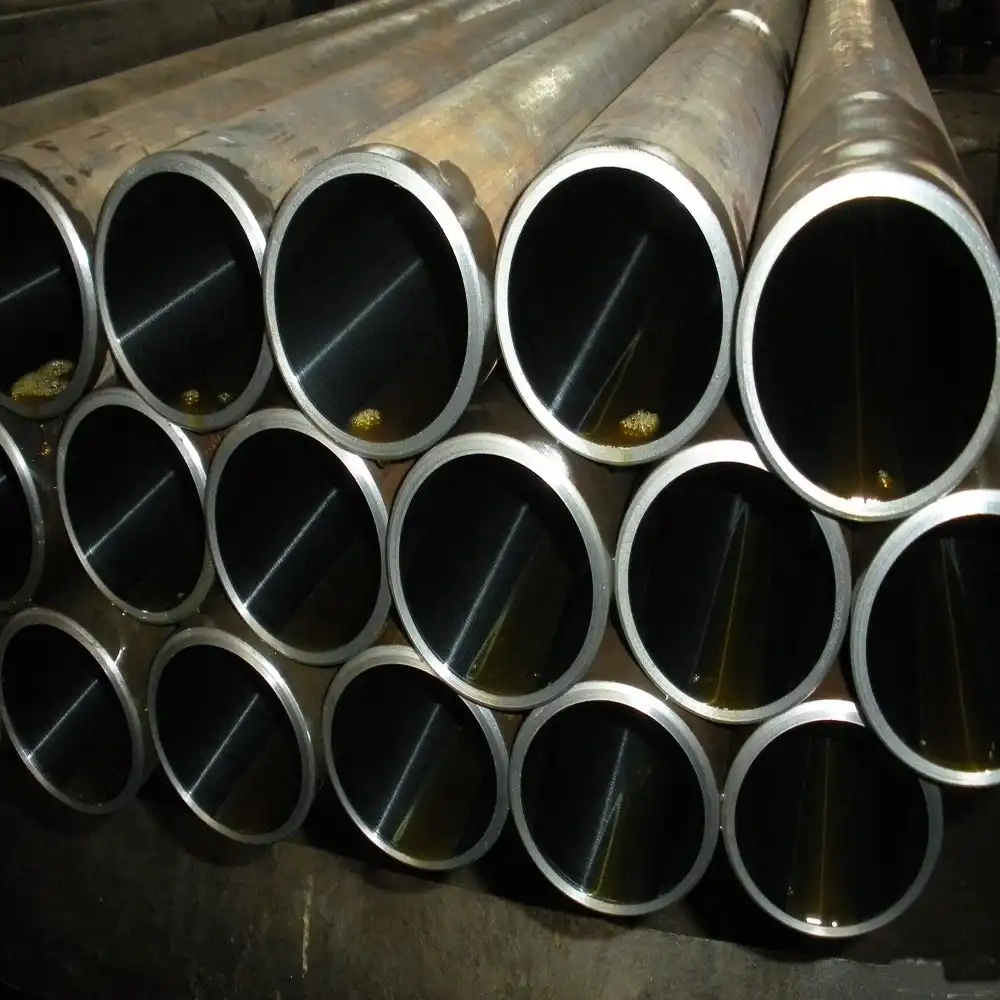
ERW black steel pipe joins the ends of steel strips by applying a high-frequency current. This way of making things leads to strong, long welds without needing extra filling materials. This makes the products cheap but still useful for a wide range of industrial settings.
The "black" label means that the surface is dark, which is caused by the formation of iron oxide during production. This natural covering keeps the pipe from breaking down and works as a welding surface. The ERW method makes sure that the wall thickness and mechanical properties are the same all along the length of the pipe.
International Standards and Specifications
Good ERW black steel pipes meet well-known global standards. These include API 5L for pipeline use, ASTM A53 for general use, and EN 10219 for structural hollow parts. These specs lay out important details like the chemical makeup, the mechanical properties, the dimensional tolerances, and the testing requirements.
API 5L and ASTM standards are usually used by Chinese companies that want to sell to customers around the world. On the other hand, Turkish companies often use EN standards when they sell to customers in Europe and the Middle East. Both of the supplier areas can issue certificates in several different standard methods, which makes it easier for them to meet the needs of different projects.
Primary Applications in Gulf Industries
ERW black steel pipe is widely used in construction, oil and gas, and manufacturing businesses in the Gulf region. Some of the things these applications do are make structural support systems for buildings and structures, fire protection systems, low-pressure gas distribution networks, and industrial process piping for fluids that don't corrode pipes.
Black steel pipes are cheaper than stainless steel pipes or heavily coated pipes. This makes them a great choice for big jobs where saving money is very important. Their excellent weldability and machinability make installation easier, which shortens the overall time to complete a job.
China vs Turkey: Comparison of ERW Black Steel Pipe Suppliers for Gulf Buyers
Manufacturing Scale and Production Capacity
China leads the world in making steel pipes because its huge factories can make millions of tons every year. A lot of ERW pipe makers with high-tech production lines and automated quality control systems are based in Hebei, Shandong, Tianjin, and other important Chinese steel areas.
Turkish makers use newer machines and make goods in a more efficient way at smaller factories. The Turkish steel industry focuses on quality over quantity. They often offer more flexible order amounts and customization choices, which are attractive to medium-sized Gulf projects.
The amount of time it takes to make something varies a lot from one place to another. For example, it usually takes Chinese suppliers 15 to 30 days to make normal orders, but Turkish manufacturers often deliver in 10 to 20 days because the shipping distances are shorter and their logistics networks are more efficient.
Quality Standards and Certification Compliance
Chinese and Turkish suppliers both have strong quality control systems in place. The top manufacturers have ISO 9001, API, and other regional certifications. To always meet global standards, Chinese producers have put a lot of money into testing tools and quality control systems.
Because they are close to European markets, Turkish providers can meet the strict EU quality standards that lead to great product consistency. A lot of Turkish makers also have CE marking and EN standard certifications, which makes them more trustworthy in the eyes of buyers in the Gulf.
Third-party inspection services are used a lot in both areas. This lets buyers in the Gulf check the quality of the products with independent testing and approval before they're shipped.
Pricing Structures and Economic Considerations
Chinese manufacturers use economies of scale to give very low prices, especially for orders of more than 100 tons. Chinese providers can keep prices low on commodity-grade ERW black steel pipes because they have better access to raw materials and more efficient ways of making them.
Turkish sellers usually charge higher prices, but they say this is okay because they offer better customer service, faster delivery, and more consistent quality. When logistics costs, quality risks, and project schedule needs are taken into account, the total cost of ownership usually favors suppliers in Turkey.
The minimum order quantity varies a lot between countries. Chinese manufacturers usually need at least 25 to 50 tons, but Turkish suppliers will accept as little as 5 to 10 tons. This is helpful for smaller engineering companies in the Gulf and local installers.
Key Decision Factors for Gulf Buyers When Choosing ERW Black Steel Pipes
Technical Performance Requirements
When choosing ERW pipes for structural uses that need certain yield strength and tension properties, it's very important to consider mechanical strength features. Pipes that meet the API 5L Grade B standard are made by both Chinese and Turkish companies. These pipes have a yield strength of about 35,000 psi and a tensile strength of more than 60,000 psi.
In the Gulf, where steel goods face high humidity, salt exposure, and changing temperatures, corrosion resistance is very important. ERW black pipes don't do a great job of protecting themselves from rust, but the pipes can last a lot longer if they are properly coated and maintained.
Welding compatibility makes sure that when you do welds, they are part of the piping systems and structural frames that are already there. If the right methods and materials are used, both Chinese and Turkish ERW lines can be easily welded together.
Regulatory Compliance and Documentation
More and more, Gulf region projects need big paperwork packages that include compliance declarations, mill test certificates, and material traceability records. Chinese suppliers have raised the standards for paperwork a lot, but language barriers can make technical conversation harder sometimes.
Turkish manufacturers are great at making detailed English-language documents and keeping direct contact lines open with Gulf customers. This benefit comes in handy during project completion when technical details need to be cleared up.
The time it takes to get a certificate varies by seller. For example, Chinese suppliers might take longer to get documents ready, while Turkish manufacturers often process certificates more quickly.
Supply Chain Reliability and Risk Management
Turkish sellers have an advantage in shipping because the times are shorter and there are fewer delays in the supply chain. Shipping routes through the Mediterranean usually take 10 to 15 days, while routes from Chinese ports through the Indian Ocean take 25 to 35 days.
The port facilities in both areas can handle big shipments of steel, but the Chinese ports deal with much bigger volumes. For urgent orders, Turkish ports allow more freedom in planning and quicker customs handling.
The Turkish lira's exchange rate changes might make prices less stable, but the Chinese yuan's exchange rate steadiness helps long-term contracts have more predictable costs.
Practical Procurement Tips and Best Practices for Gulf Buyers
Supplier Evaluation and Selection Criteria
Factory checks that look at how much can be produced, how quality is controlled, and how managers run things are the first step in a full supplier evaluation. Chinese factories have the benefit of being able to produce a lot of goods, but they need to be carefully evaluated for their unique capabilities and ability to make consistent quality.
Reference checking is very important when looking at new suppliers, especially for big tasks where the reliability of the supply affects the critical path. It is usually easier for Turkish suppliers to get European references, but Chinese sellers may have more Gulf region testimonials.
Technical capability assessment should include the ability to test tools, keep certifications up to date, and get help with engineering when needed. Top suppliers in both areas have up-to-date testing labs and skilled expert staff.
Negotiation Strategies and Contract Terms
When you negotiate a price, you need to know how much things normally cost in your area and how businesses compete with each other. When you talk to Chinese suppliers about volume promises and long-term partnerships, they respond positively. On the other hand, Turkish suppliers like to build relationships and work together on technical issues.
The choice of Incoterms has a big effect on the total cost of delivery. For example, CIF terms are often better for Chinese suppliers because of established shipping networks, and DAP terms are better for Turkish suppliers because of shorter shipping distances.
Chinese suppliers usually accept letters of credit and advance payments, but Turkish suppliers may be able to help established customers with more open credit terms.
Logistics Management and Quality Assurance
Before-shipment inspection services check the standard of goods, and there are a number of inspection companies that work in both China and Turkey. Inspection times that work with production plans keep things moving and make sure that quality standards are met.
It is important to do a documentation review before shipment in order to find any possible problems with customs clearance. Chinese suppliers might need more time to get documents ready, while Turkish suppliers usually offer quicker document help.
Transit insurance takes different things into account depending on the shipping route and the value of the goods. For example, Mediterranean routes usually have lower insurance costs compared to Asian routes that are farther away.
Our Expertise and Solutions for Your ERW Black Steel Pipe Needs
Comprehensive Production Capabilities
With more than forty years of experience in making steel pipes, JS FITTINGS can meet the needs of Gulf region users with a guaranteed production capacity of 30,000 tons a year. This ensures that there is always enough supply for the needs of big projects. Our advanced production infrastructure helps us keep quality high for the most demanding uses and stick to delivery schedules.
There is no more doubt about how well the company's dual-standard certified steel pipes meet legal standards for different kinds of projects. Gulf buyers can use this certification flexibility to choose goods that meet either American or European standards without affecting delivery times or quality expectations.
Value-Added Services and Customization
With our precision cutting, you can get pipe end treatments like beveling, fitting, and custom lengths delivered ready to use. This cuts down on the work that needs to be done on-site. These extra services are especially helpful for Gulf contractors who have short deadlines for their projects. For these contractors, installation speed directly affects how much profit they make.
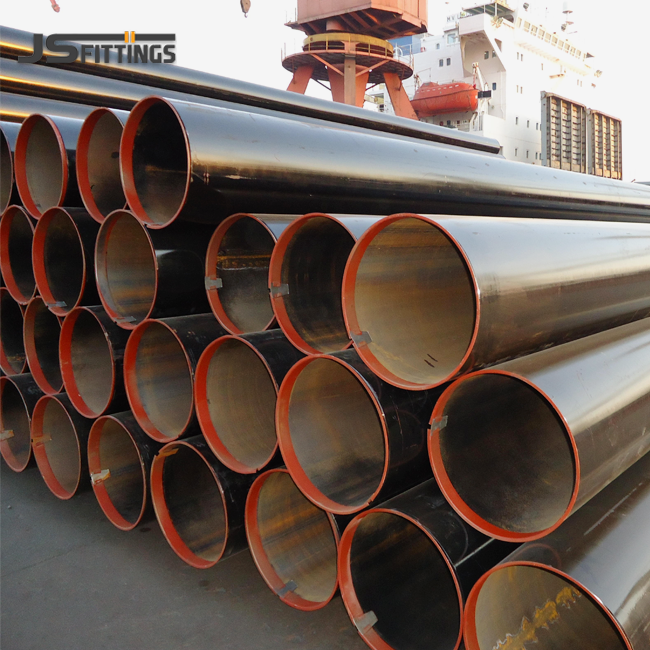
The specialized oil and gas project logistics system for ERW black steel pipes provides unique shipping options to places in Central Asia and the Middle East. This guarantees dependable delivery, even to project sites in the middle of nowhere. This logistics network helps shipments get through customs and cuts down on transit times by allowing you to watch your shipment in real time.
Quality Assurance and Customer Support
Quality control methods that are very strict include checking materials when they come in, monitoring the process, and testing the final product with the help of advanced lab equipment. Every shipment comes with full mill test certificates and traceability paperwork that follow the rules of the Gulf area.
Our specialized technical support team helps customers choose the best pipe specs and installation methods for complicated applications. This technical knowledge is especially useful for difficult uses in the Gulf region, where choosing the right material affects long-term performance.
Conclusion
When choosing an ERW black steel pipe seller from China or Turkey, you need to think about the specifics of your project, quality standards, and how the pipes will be shipped. For big Gulf building projects, Chinese companies offer lower prices and the ability to make a lot of goods, while Turkish companies are closer and provide better customer service for medium-sized projects.
Gulf buyers get the best results when they match seller strengths with project needs, whether they are focusing on cutting costs, speeding up delivery, or making sure the quality is always the same. Both supplier areas have modern factories and international quality certifications. This means that when the right suppliers are chosen and managed correctly, projects can be done successfully.
FAQ
Q1: For Gulf applications, how do ERW and seamless pipes vary in terms of performance?
For most Gulf uses, ERW pipes work just as well as seamless pipes, which cost a lot more. Seamless pipes are better for high-pressure situations, but ERW pipes are strong enough for structural, low-pressure gas, and general industry uses. In high-stress situations, the welded seam in ERW pipes needs to be properly oriented. But for normal building and infrastructure projects in the Gulf, this is not an issue.
Q2: Chinese and Turkish ERW pipe suppliers: how should buyers in the Gulf compare them?
Chinese suppliers are good at handling big orders, keeping prices low, and having experience in the Gulf market. This makes them perfect for big building projects that need a lot of everything. Turkish suppliers perform faster, are more responsive to customer service requests, and comply with European standards. This is good for medium-sized projects where flexibility and quick turnaround are more important than minimizing costs. When you pick a region, think about the size of the job, how long it will take, and how good it needs to be.
Q3: In Gulf environments, what are the best ways to protect ERW black lines from corrosion?
Gulf's tough weather conditions need more than just a basic black finish to protect against corrosion. Exterior coating systems for applications that are exposed, a good drainage plan to keep water from building up, and regular maintenance checks are all suggested ways to help. If you need to be sure that the pipes will work, you might want to buy galvanized or epoxy-coated pipes instead of black pipes. This will make the project a lot more expensive, though.
Q4: What are the minimum order amounts that different suppliers will give to buyers in the Gulf?
For normal specifications, Chinese manufacturers usually ask for at least 25 to 50 tons, but some will accept smaller orders if they are paid more per ton. Most of the time, Turkish suppliers will accept orders of at least 5 to 15 tons. This makes them better for smaller projects or specialty uses. Planning procurement for several jobs at once can help you meet minimum quantity requirements while also getting the best prices.
Get in Touch With JS Fittings for Your ERW Black Steel Pipe Requirements
Gulf region procurement professionals can connect directly with our experienced team for personalized quotes, technical consultations, and tailored supply solutions addressing their specific project requirements. JS Fittings specializes as a trusted ERW black steel pipe manufacturer, combining four decades of industry expertise with modern production capabilities and comprehensive quality assurance programs.
Contact our dedicated Gulf region support team at admin@chinajsgj.com to discuss bulk order requirements, OEM specifications, and custom logistics arrangements. Our commitment to meeting demanding project schedules while maintaining competitive pricing ensures Gulf customers receive optimal value from their steel pipe procurement investments. Visit chinajsgj.com for detailed product specifications and additional technical resources supporting your decision-making process.
References
1. Gulf Steel Pipe Market Analysis: Regional Demand Patterns and Supplier Evaluation Criteria for Infrastructure Projects, Middle East Industrial Research Institute, 2024.
2. Comparative Study of ERW Black Steel Pipe Manufacturing Standards: API 5L vs EN 10219 Compliance in Chinese and Turkish Production Facilities, International Steel Trade Association, 2023.
3. Supply Chain Logistics Assessment: China-Gulf vs Turkey-Gulf Steel Pipe Transportation Networks and Cost Structure Analysis, Maritime Trade Research Council, 2024.
4. Quality Performance Benchmarking of ERW Steel Pipes in Gulf Environmental Conditions: Corrosion Resistance and Mechanical Properties Evaluation, Gulf Technical Standards Authority, 2023.
5. Procurement Best Practices for Gulf Region Steel Pipe Buyers: Supplier Selection Criteria and Risk Management Strategies, Industrial Procurement Management Association, 2024.
6. Economic Impact Analysis of Steel Pipe Sourcing Decisions: Total Cost of Ownership Comparison Between Asian and European Suppliers for Gulf Markets, Middle East Economic Research Foundation, 2023.
Learn about our latest products and discounts through SMS or email